
The power of wood in interior design
Wood has always been at the heart of interior design. Timeless, tactile and emotionally resonant. Whether it’s grounding a minimalist space or bringing warmth to an expansive commercial interior, the use of wood and wood-inspired materials continues to shape how we experience indoor environments.
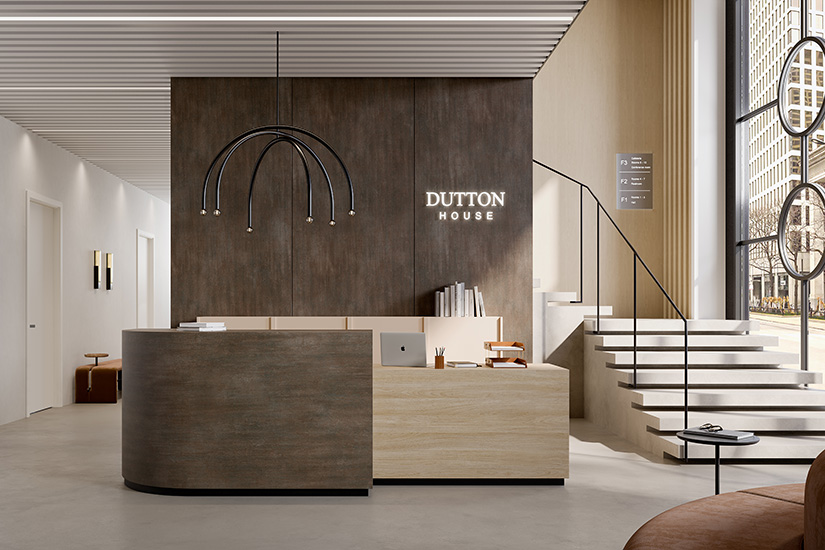
“Designers are moving away from the cool whites and greys that have dominated the past decade and embracing a richer, more comforting palette of warm off-whites, tans, beiges, and browns. This evolution reflects a deeper desire to create interiors that feel inviting, grounding, and human,” Nina Bailey, EU Design Lead at Formica Group.
Why wood works so well
Wood instantly adds warmth and texture, creating inviting spaces people love to be in. Its organic tones balance minimalism with depth and character and can adapt to a wide range of aesthetics — from sleek Scandinavian interiors to rich, classic schemes. Wood also connects us to nature, fostering calm and comfort in modern living and working environments.
Natural wood will always have a place in design, but as an alternative, the Formica® Woods Collection contains over 80 durable and timeless woodgrain laminates from around the globe. Explore the question of Natural Wood vs Woodgrain Laminate in our blog.
Design direction from the Formica Woods Collection
The Formica Woods Collection delivers a broad palette inspired by local European species, including oak, ash, walnut and elm, in addition to exploring both natural and greyed/desaturated tones. The woodgrain laminates link indoor spaces to the environment around them, forming a visual bridge between nature and architecture.
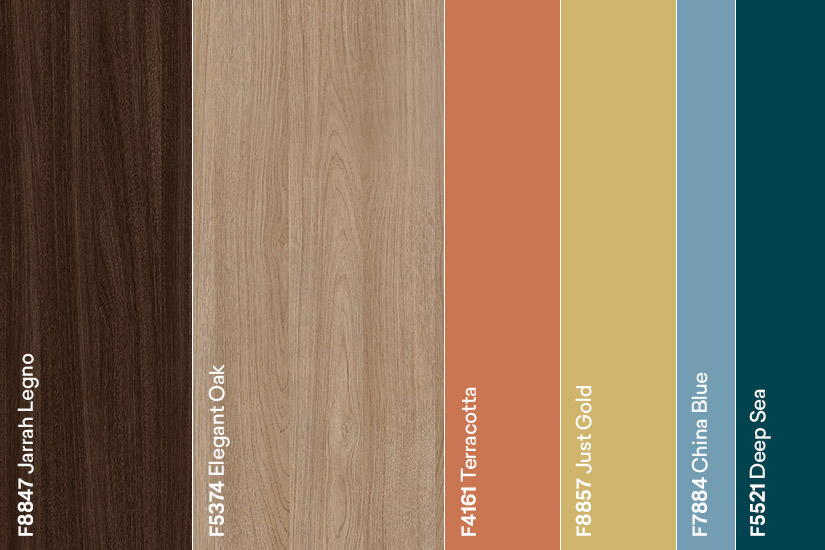
In this palette, Elegant Oak and Jarrah Legno form the foundation, complemented by the earthy richness of Just Gold and Terracotta. The scheme is gently balanced by the subtle, cooler undertones of China Blue and Deep Sea, adding contrast while maintaining the overall sense of warmth and harmony. Order this sample palette.
“The growing movement towards warmth in interiors reflects a broader cultural shift in how we experience interiors. More than ever, we see our spaces as sanctuaries; places that nurture comfort, connection, and emotional well-being rather than striving for cold, minimalist perfection.”
Smart wood design trends
Contemporary designers aren’t just using wood, they’re mixing wood tones and grains intelligently:
- Layered wood palettes: Designers increasingly use different wood species or tones within the same space to create distinction and depth. This approach treats wood as its own colour palette rather than a single accent.
- Minimalist wood grains: Linear, subtle wood grains like ash fit modern minimal schemes perfectly, adding texture without overpowering calm interiors.
- Greyed wood tones: Muted and greyed woods bring a modern twist to natural materials, working beautifully as both backgrounds and focal accents.
These trends show that designers are moving beyond simply choosing wood - they’re strategically integrating wood-inspired surfaces to support mood, balance, and user experience.
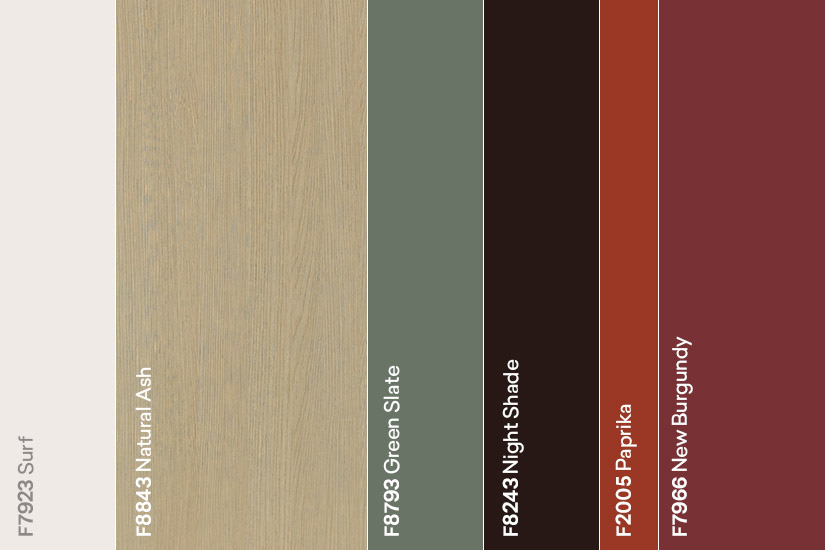
This second palette captures the concept of warmth in interiors beautifully, with Natural Ash as the anchoring decor. It’s enriched by the deep, comforting tones of New Burgundy, Night Shade and Paprika, while Green Slate introduces a warm, nature-inspired green with subtle yellow undertones. The look is completed with Surf, a soft neutral that provides a sense of calm balance throughout the palette. Order this sample palette.
Practical ways to use wood-inspired laminate in interiors
Here are some practical ways to use woodgrain laminates that work across sectors:
- Feature walls and panelling to create inviting, warm interiors
- Furniture surfaces with rich woodgrains to anchor seating or work areas
- Integrated cabinetry and wall systems that blend function with natural texture
- Contrasting tones of wood paired with soft colours or metals for layered sophistication
All these applications show that woodgrain laminates can deliver both aesthetic beauty and practical performance. Architects and designers have the freedom to specify a woodgrain in a design palette, knowing that the laminate material is durable and long-lasting and doesn’t require the maintenance of using a natural material.
With innovative collections like the Formica® Woods Collection and a strategic eye for mixing tones, designers have more ways than ever to create spaces that feel balanced, warm, and deeply connected to nature.
Category
Related Articles


