
Phenolic vs. Epoxy Resin Countertops: A Performance Comparison for Commercial and Laboratory Spaces
Explore why Phenolic Resin surfaces, like Trespa® TopLab®, are the preferred choice for performance-driven environments.
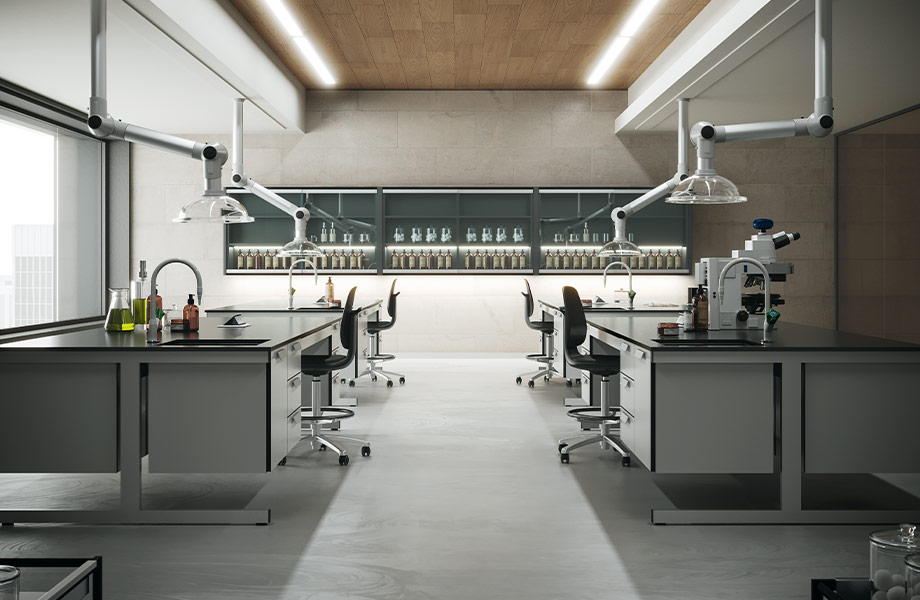
When selecting countertops for commercial, healthcare, education or laboratory environments, two high-performance materials are most often considered: phenolic resin and epoxy resin. Both offer durability and chemical resistance, but phenolic resin delivers a more balanced combination of performance, fabrication efficiency, sustainability, and long-term reliability for most applications.
Trespa® TopLab® panels from Formica Group are pressed, solid-core phenolic surfaces engineered for demanding environments. While epoxy resin remains suitable for certain specialized uses, phenolic resin is often the more practical and cost-effective choice.
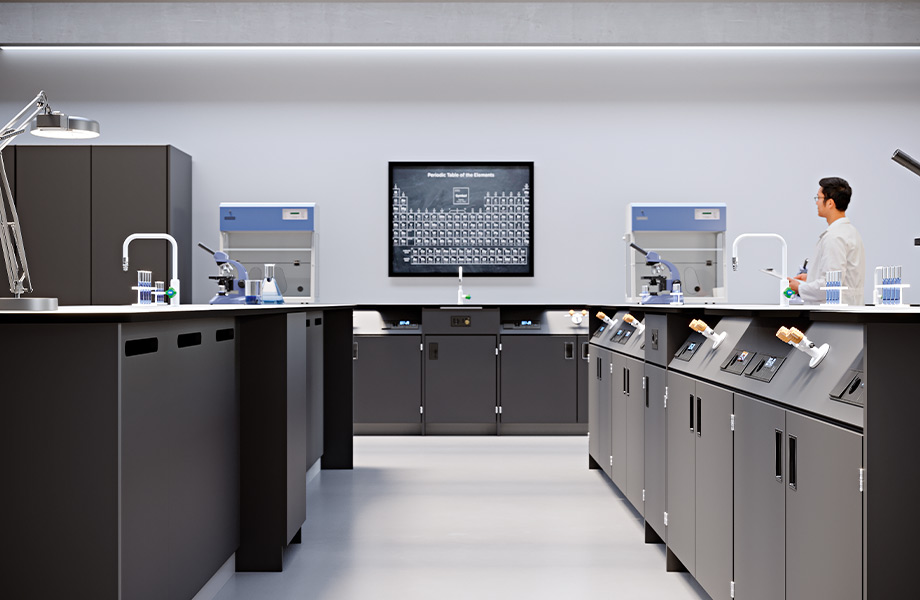
1. Material and Construction
Phenolic resin surfaces, also referred to as compact High-Pressure Laminate (HPL), such as Trespa® TopLab® are pressed panels made by fusing layers of paper and resin into a self-supporting, structural surface that does not require a substrate. Trespa® TopLab® Plus contains 65 to 70 percent third-party verified biobased content, while Plus Align increases this to approximately 83 percent.
Epoxy resin countertops are poured materials made primarily from silica sand and resin. Final performance depends heavily on formulation, curing, and installation quality. Epoxy fabrication dust contains crystalline silica, which OSHA identifies as a cause of silicosis.1
2. Durability and Impact Resistance
Phenolic panels are extremely dense, flat and structurally stable, making them well suited for demanding environments. Trespa® TopLab®’s innovative acrylic-through Electron Beem Cured (EBC) surface resists chipping, cracking and surface wear over time.
Epoxy surfaces are hard but can scratch more easily and may oxidize or fade with repeated cleaning and sunlight exposure. This makes it a less attractive choice for labs that have large windows and rely on natural light.
3. Chemical and Stain Resistance
Trespa® TopLab® is engineered to resist common cleaning agents, solvents, acids and laboratory reagents while maintaining a closed, non-porous surface that supports hygiene protocols. End-users should always evaluate the SEFA 3 testing by chemical to determine if the top matches the required application.
Epoxy may achieve higher cumulative chemical resistance scores, but compatibility varies by formulation and should be evaluated based on project-specific chemicals. Again, it is important to check the SEFA 3 testing for every project and surface.
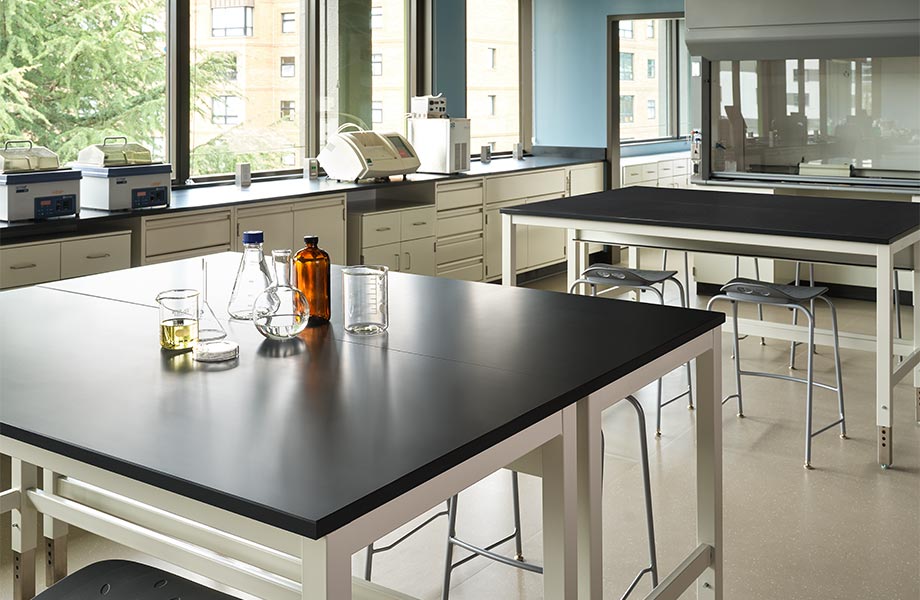
4. Heat and Thermal Performance
Trespa® TopLab® Plus is rated for dry heat exposure up to 320°F for short durations and 212°F for wet heat, meeting the needs of most commercial and institutional applications.2
Epoxy resin can withstand higher peak temperatures, typically between 360°F and 380°F, and may be preferred in extreme heat environments.3
5. Fabrication, Installation and Lead Time
Phenolic panels can be fabricated with standard woodworking tools (such as a CNC cutting machine), installed without a substrate, and used vertically, simplifying installation and reducing labor. Trespa® TopLab® is stocked and available in ½-inch, 5/8-inch, ¾-inch, and 1-inch thicknesses, reducing lead-time for your next project
Epoxy countertops require specialized tooling (such as a diamond-tipped saw), skilled labor, and long curing times. They are heavier, typically weighing about 12 lbs per square foot at 1 inch thick, compared to approximately 7 lbs per square foot for phenolic. These factors make on-site fabrication much more difficult compared to phenolic panels.
6. Aesthetics and Design Flexibility
Phenolic surfaces offer a wide range of consistent colors and finishes with clean, machined edges. Designers can change aesthetics without sacrificing performance.
While epoxy can come in custom and artistic finishes, it is most commonly produced in black due to the cost and complexity of changing molds and production processes.











7. Sustainability and Transparency
Trespa® TopLab® Plus and Plus Align incorporate biobased cores made from recycled or natural wood fibers, with Plus containing 65 percent or more biobased content and Plus Align approximately 83 percent, both third-party verified.4
Trespa® TopLab® Plus has a net negative embodied carbon footprint of –4.5 kg CO₂e per square meter (A1–A3), meaning it stores more carbon than is released during production, as documented in third-party verified Environmental Product Declarations (EPDs). Perkins and Will identified phenolic panels as a preferred material in their Low Carbon Labs Reimagined initiative. Trespa® TopLab® products are supported by third-party verified Health Product Declarations (HPDs) and include a standard 10-year warranty.
By comparison, epoxy manufacturers typically do not provide EPDs or HPDs, contain zero percent biobased content, and offer limited environmental transparency. One of the more sustainable epoxy options, Durcon Greenstone, incorporates a minimum of 10 percent recycled glass but typically carries a significant cost premium and still contains less biobased content than Trespa® TopLab® Plus or Plus Align.
Final Verdict
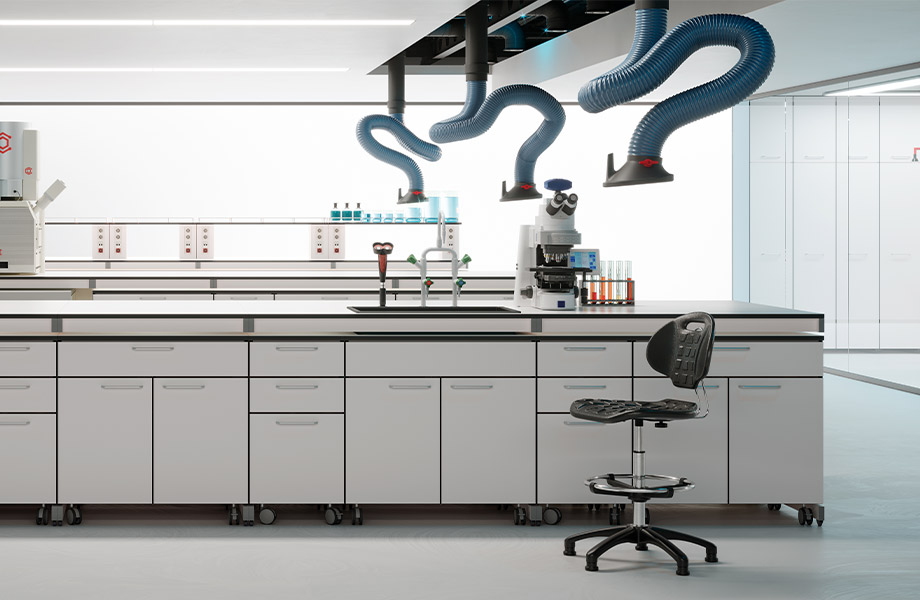
While both materials serve important roles, phenolic resin countertops, especially Trespa® TopLab®, offer a more balanced solution for most commercial, educational, healthcare and laboratory environments. They combine durability, chemical resistance, fabrication efficiency, and sustainability in a way epoxy resin cannot consistently match.
For projects where reliability, hygiene, and operational efficiency are priorities, phenolic resin is often the more practical and sustainable choice.
Sources
1U.S. Department of Labor
Category
Related Articles


